

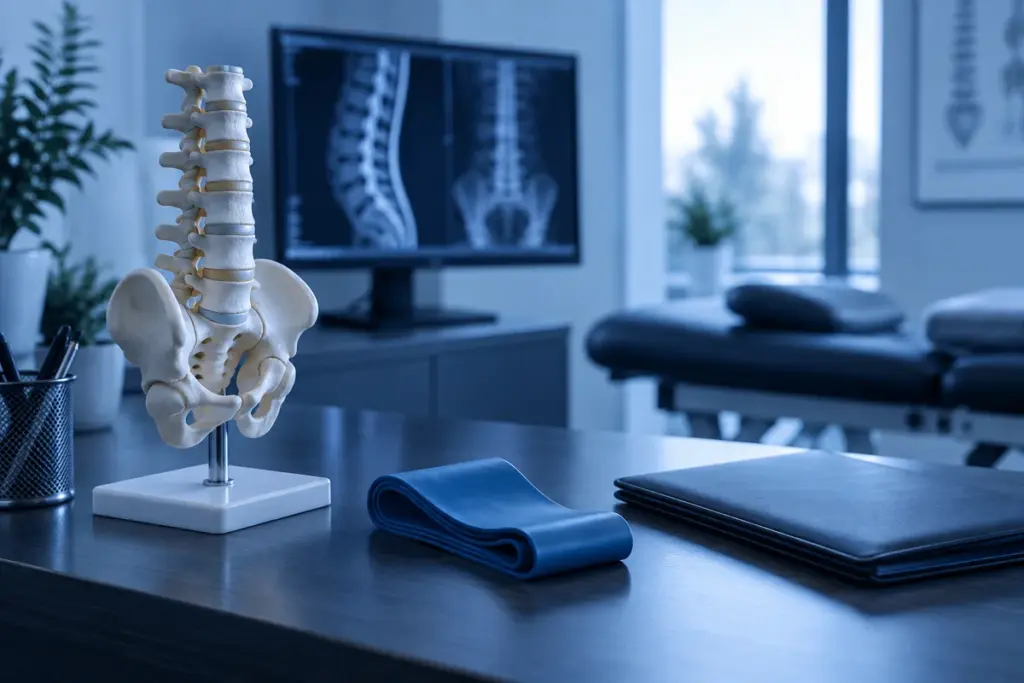
A diagnosis of spinal stenosis does not mean surgery is inevitable. For many people, the right combination of exercise, physiotherapy and targeted injections restores comfort and confidence. For others, surgery to free the trapped nerves can make walking possible again. The key is knowing which of the spinal stenosis treatment options suits you.
Dr. Purnajyoti Banerjee, Consultant Orthopaedic Spinal Surgeon and Fellow of the Royal College of Surgeons of England, brings more than 20 years of orthopaedic experience to that decision. He sees patients at The Harley Street Hospital and LIPS Healthcare in Battersea, and consults in English, Bengali, Hindi and Urdu.
Start With an Accurate Diagnosis
Narrowing on a scan does not always cause symptoms, so treatment should never be based on imaging alone. Instead, the right plan comes from combining your symptoms, a careful examination and an MRI scan. Where needed, nerve or circulation tests help rule out conditions that feel similar, such as nerve damage in the limbs or poor blood flow to the legs.
It also helps to be clear about what treatment can achieve. Non-surgical care cannot widen a narrowed canal, but it can improve strength, stamina and comfort. Surgery, by contrast, can create more space for the nerves, with the main aim of improving leg or arm symptoms and walking rather than removing every trace of back pain.
Non-Surgical Treatment Options
For many people with mild or moderate symptoms, non-surgical care is the sensible first step, and it is often all that is needed.
Exercise and Physiotherapy
A structured physiotherapy programme is often the foundation of treatment. It typically focuses on strengthening the trunk and hips, gentle forward-bending stretches, gradually building walking distance and improving general fitness. Many people find cycling, swimming or an exercise bike more comfortable than long periods of standing.
Staying active also benefits health more widely. The NHS physical activity guidelines recommend at least 150 minutes of moderate activity each week, along with strengthening activities on at least two days. A physiotherapist can help adapt these targets to suit your symptoms.
Medicines, Used Carefully
Simple pain relief may be used for short periods to make exercise and daily activity easier. However, medicines need careful thought, particularly in older adults, because of side effects and interactions. NICE guidance on low back pain and sciatica (NG59) advises against gabapentinoids, other antiepileptic medicines, oral steroids and benzodiazepines for sciatica, and recommends against opioids for long-term sciatica. Your GP or specialist will advise on what is appropriate for you and how long to take it.
Image-Guided Spinal Injections
When leg pain is the main problem, an epidural or nerve root injection may be considered. Under X-ray guidance, a local anaesthetic and steroid are placed close to the irritated nerve. For some people, this eases pain for a period, creating a window in which physiotherapy becomes more achievable. An injection can also help confirm which level of the spine is responsible. Relief varies from person to person and is often temporary, so injections usually form part of a broader plan rather than a complete solution.
When Does Surgery Become an Option?
Surgery is usually discussed when leg or arm symptoms are significantly limiting daily life, when walking distance has fallen considerably, or when non-surgical treatment has been tried without enough benefit. It may also be recommended when nerve function is getting worse, for example with increasing weakness. In the neck, where the spinal cord itself can be compressed, surgery may be advised earlier.
In every case, the decision is shared between you and your surgeon. The question is not simply whether surgery is possible, but whether the likely benefit outweighs the risks for you.
The Main Surgical Options
Decompression Surgery
Lumbar decompression is the most established operation for spinal stenosis in the lower back. The surgeon removes the thickened ligament and a small amount of bone that is narrowing the canal, creating more room for the nerves. Improvements in leg symptoms and walking are the main aims, although numbness or weakness that has been present for a long time may only partly recover.
Minimally Invasive Techniques
Where suitable, decompression can be carried out using minimally invasive (keyhole) techniques, working through a narrow tube with a microscope or camera. These approaches aim to cause less disruption to the surrounding muscles. Whether they are appropriate depends on the pattern of narrowing, the alignment of the spine, any previous surgery and your general health, and they still carry the general risks of spinal surgery.
Decompression With Stabilisation
If the narrowing is combined with instability, a significant slip of one vertebra on another, or a deformity, decompression alone may not be enough, and the spine may also need to be stabilised (fused). This is a larger operation with a longer recovery, so the balance of benefit and risk needs particularly careful discussion. In the neck, surgery may be performed from the front or the back, depending on the cause and the number of levels involved.
Risks and Recovery After Surgery
Every spinal operation carries risks, and an open discussion of them is an essential part of consent. For lumbar decompression, the NHS describes uncommon but serious complications, including a leak of spinal fluid, damage to the spinal nerves, back pain that does not improve and vertebrae moving out of place. General risks of surgery, such as infection, bleeding and blood clots, also apply. Your surgeon will explain how your general health and the extent of the procedure may affect your individual risk.
Recovery follows a gradual pattern. The NHS explains that, after lumbar decompression, people may be able to leave hospital after around two to five days, return to work after around four to six weeks, and resume all usual activities within around 12 weeks. In the early weeks, short and regular walks are encouraged, while heavy lifting and prolonged bending are best avoided. Physiotherapy and strengthening work then help to build on the improvement over the following months.
How to Choose the Right Option for You
A good consultation should leave you clear about three things: what is causing your symptoms, which treatments are realistic for your particular pattern of narrowing, and what each option is likely to change in your daily life.
It is worth asking how much improvement you can expect, how long it is likely to last, what the recovery would mean for your work and hobbies, and what is likely to happen if you choose to wait. For some people with stable or manageable symptoms, continuing with exercise and monitoring, rather than moving straight to a procedure, is a perfectly reasonable choice.
Certain changes, however, should always lead to an early review: increasing weakness, worsening balance, reduced hand function, or any change in bladder or bowel control. The NHS advises going to A&E or calling 999 if you develop numbness around your genitals or back passage, difficulty passing urine, loss of bladder or bowel control, or severe or worsening weakness or numbness in both legs.
A Few Questions Patients Often Ask
Can exercise help me avoid surgery?
Exercise cannot widen the spinal canal, but improving strength, posture and fitness can increase walking tolerance and reduce day-to-day discomfort for many people. A physiotherapist can design a programme that suits your symptoms.
How long does a spinal injection last?
It varies considerably. Some people notice relief for several weeks or months, while others notice little change. Injections are most useful for calming an irritated nerve and making rehabilitation easier.
Will surgery cure my back pain?
Decompression surgery is mainly aimed at nerve-related symptoms in the legs or arms, and at improving walking. Long-standing back pain may improve, but it does not always resolve completely, and your surgeon should discuss realistic outcomes with you before any decision.
Find the Treatment That Fits Your Life
Spinal stenosis is common and, for most people, very manageable. The right plan depends on an accurate diagnosis and an honest discussion of what each treatment can and cannot offer. If you would like a clear explanation of the options that may suit your symptoms and scan findings, Dr. Purnajyoti Banerjee would be pleased to see you at The Harley Street Hospital or LIPS Healthcare in Battersea. Request an appointment with Dr. Banerjee.
