
What is a Medial Branch Block Injection?
A Medial Branch Block Injection primarily serves as a diagnostic procedure. It helps identify the source of pain in the spine, particularly related to the facet joints. When the anaesthetic is administered, pain relief confirms these joints as the pain source. This confirmation can subsequently lead to more definitive treatments such as radiofrequency ablation.
NICE guidelines highlight the effectiveness of this procedure in diagnosing facet joint pain with a success rate of over 70% in correctly identifying the pain source.
Facet Joint Injection is a minimally invasive procedure aimed at relieving pain in the small joints of the spine. It is particularly effective for patients experiencing pain from facet joint arthritis or mechanical back pain. According to NHS, this procedure can help identify whether the facet joints are the pain source, offering both diagnostic and therapeutic benefits.
When Is a Medial Branch Block Injection Recommended?
Dr. Purnajyoti Banerjee, a consultant orthopaedic spine surgeon, recommends a Medial Branch Block Injection for patients experiencing chronic back or neck pain, particularly when facet joint pain is suspected in your neck or lower back. This procedure also assists in determining the next steps in treatment, such as radiofrequency ablation, if the block provides significant pain relief.
Conditions a Medial Branch Block Injection Treats
- Facet joint pain
- Mechanical back pain
- Neck pain
- Pain confirmation before radiofrequency
- Arthritis-related spinal pain
What Happens During Your Medial Branch Block Injection?
BEFORE
You can eat and drink unless sedation is planned. Arrive 30 minutes early for consent, and you may be asked to note your pain levels before and after.
DURING
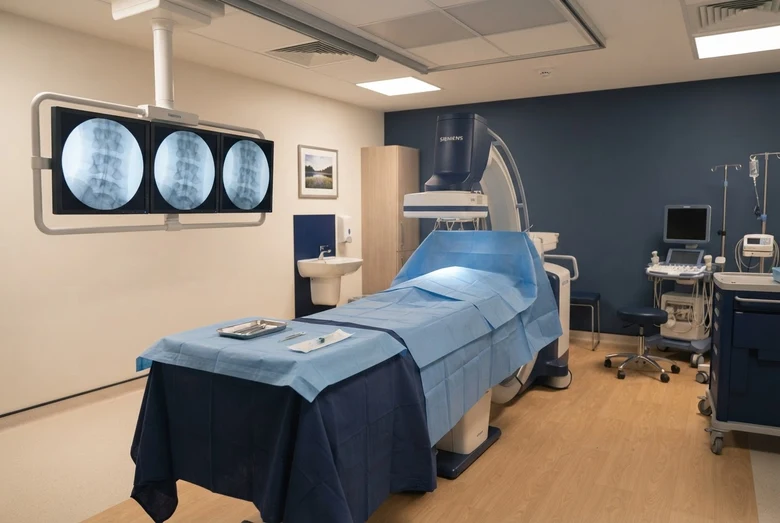
Lying face-down with the skin numbed, X-ray guidance directs fine needles to the medial branch nerves, where a small amount of local anaesthetic is placed. The procedure is brief.
AFTER
You rest for a short period and go home the same day. You will be asked to record how your pain responds over the next few hours, as this guides the next step.
Benefits
- Precisely identifies the source of pain
- Guides longer-lasting treatment such as radiofrequency
- Non-surgical and same-day
- Low volume of medication used
Considerations
- Relief from the anaesthetic is short-lived by design
- The value is diagnostic rather than lasting
- Temporary soreness
- Small risk of infection