
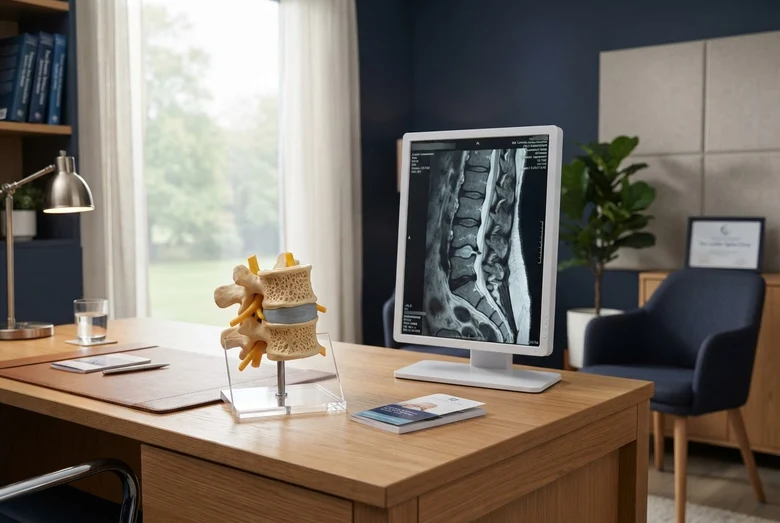
What is a Slipped Disc?
A slipped disc, also known as a herniated disc, involves the displacement of the gel-like centre of a disc in the spine. This displacement can exert pressure on nearby nerves, leading to pain and discomfort. Symptoms include back pain, numbness, tingling, and weakness in the limbs. Accurate diagnosis often involves MRI scans to confirm the extent of herniation.
Who Needs Slipped Disc Treatment?
- Confirmed disc herniation on MRI
- Sciatica or arm pain due to a slipped disc
- Numbness, tingling, or weakness in a limb
- Symptoms not improving with rest or physiotherapy
Slipped Disc Treatment: Procedure Step by Step
Assessment & Diagnosis
Assessment includes a thorough review of symptoms and MRI scans to pinpoint the severity and location of the herniation.
Anaesthetic & Positioning
The procedure is conducted under general anaesthetic with careful patient positioning to ensure safety and precision.
Guided Access
A small incision allows for imaging-guided access to the affected disc, ensuring precise treatment.
Targeted Treatment
The herniated disc fragment compressing the nerve is carefully removed to relieve pressure and alleviate symptoms.
Closure & Recovery
The incision is closed with dissolvable stitches, enabling all patients to walk the same day. Recovery times vary, but many return to light activities within weeks.
Slipped Disc Treatment Recovery Timeline
Day 0
Walk the same day; gentle rest at home
Weeks 1–2
Light activity and gentle walking
Weeks 3–6
Progressive return to work and daily tasks
Months 2–3
Gradual return to full activity and sport
Slipped Disc Treatment Risks & Considerations
As with any spine surgery, there are risks, including infection, bleeding, and nerve irritation. Dr. Purnajyoti Banerjee will discuss these openly, considering the likelihood of success for your specific case.
For more information on slipped disc treatment, visit the NHS website.
Frequently Asked Questions
Will I need surgery, or can my condition be treated without it?
Many cases improve with non-surgical treatments such as physiotherapy or spinal injections. Surgery is considered when symptoms persist or worsen.
As of 2023, approximately 1%-2% of adults experience a herniated disc each year, with a significant number benefiting from non-surgical treatments (NICE). Current studies suggest that around 90% of patients recover without surgery within six weeks.