
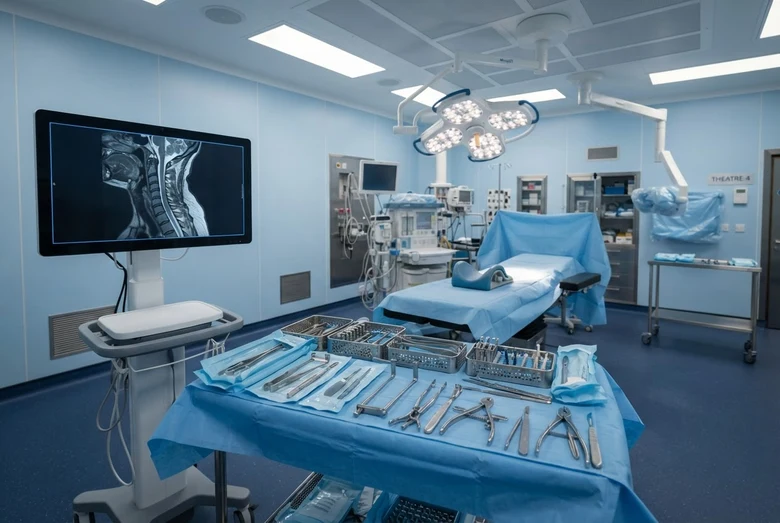
What is Cervical Spine Surgery? A Consultant Orthopaedic Spine Surgeon's Guide
Cervical spine surgery treats neck spine conditions, like herniated discs or spinal stenosis. It relieves nerve compression, often through minimally invasive techniques. Dr. Purnajyoti Banerjee, a Consultant Orthopaedic Spine Surgeon in London, employs these advanced methods for optimal outcomes.
Cervical spine surgery is crucial for many patients, primarily when conservative treatments fail. In 2023, the NHS reported that around 20% of adults experience neck pain, highlighting the potential need for surgical intervention. Surgery aims to alleviate symptoms and improve quality of life.
Who Needs Cervical Spine Surgery in London?
- Arm pain, numbness or weakness from a cervical disc herniation
- Cervical spinal stenosis narrowing around the spinal cord
- Neck pain and stiffness not improving with physiotherapy
- Cervical spine trauma requiring stabilisation
- Symptoms of nerve or spinal cord compression confirmed on MRI
- According to NHS, cervical spine surgery is recommended when non-surgical treatments do not provide relief or symptoms worsen.
How is Cervical Spine Surgery Performed?
Anaesthetic & Positioning
The procedure is carried out under general anaesthetic, with continuous monitoring to ensure patient safety.
Guided Access
A small incision is made at the front or back of the neck, precisely guided by imaging to the affected area.
Targeted Treatment
The disc or bone compressing the nerve is carefully removed. In some cases, a spacer or plate may be used for stability.
Closure & Recovery
The incision is closed with dissolvable stitches. All patients are encouraged to mobilise the same day.
Cervical Spine Surgery Recovery Timeline
Day 0
Rest at home, gentle neck movement as advised
Weeks 1–2
Light activity, gradual return to desk-based work
Weeks 3–6
Progressive return to normal daily activity
Months 2–3
Gradual return to full activity and sport
Cervical Spine Surgery Risks & Considerations
As with any surgery, cervical spine procedures carry risks such as infection, bleeding, and nerve irritation. Specific risks include temporary issues with swallowing or voice, soar throat and weakness around the shoulder. Dr. Banerjee will discuss these openly to ensure informed consent. According to a 2023 survey, surgical success rates range from 70% to 95% depending on condition severity (NICE).
Frequently Asked Questions
What is Cervical Spine Surgery?
Cervical spine surgery is a procedure to address neck spine issues, often involving minimally invasive techniques to relieve nerve compression.
How soon can I drive again after surgery?
Driving is generally safe once you can turn your head comfortably, usually around weeks 3-6 post-surgery. Always consult with your surgeon first.