
What is Kyphoplasty? A Consultant Orthopaedic Spine Surgeon's Guide
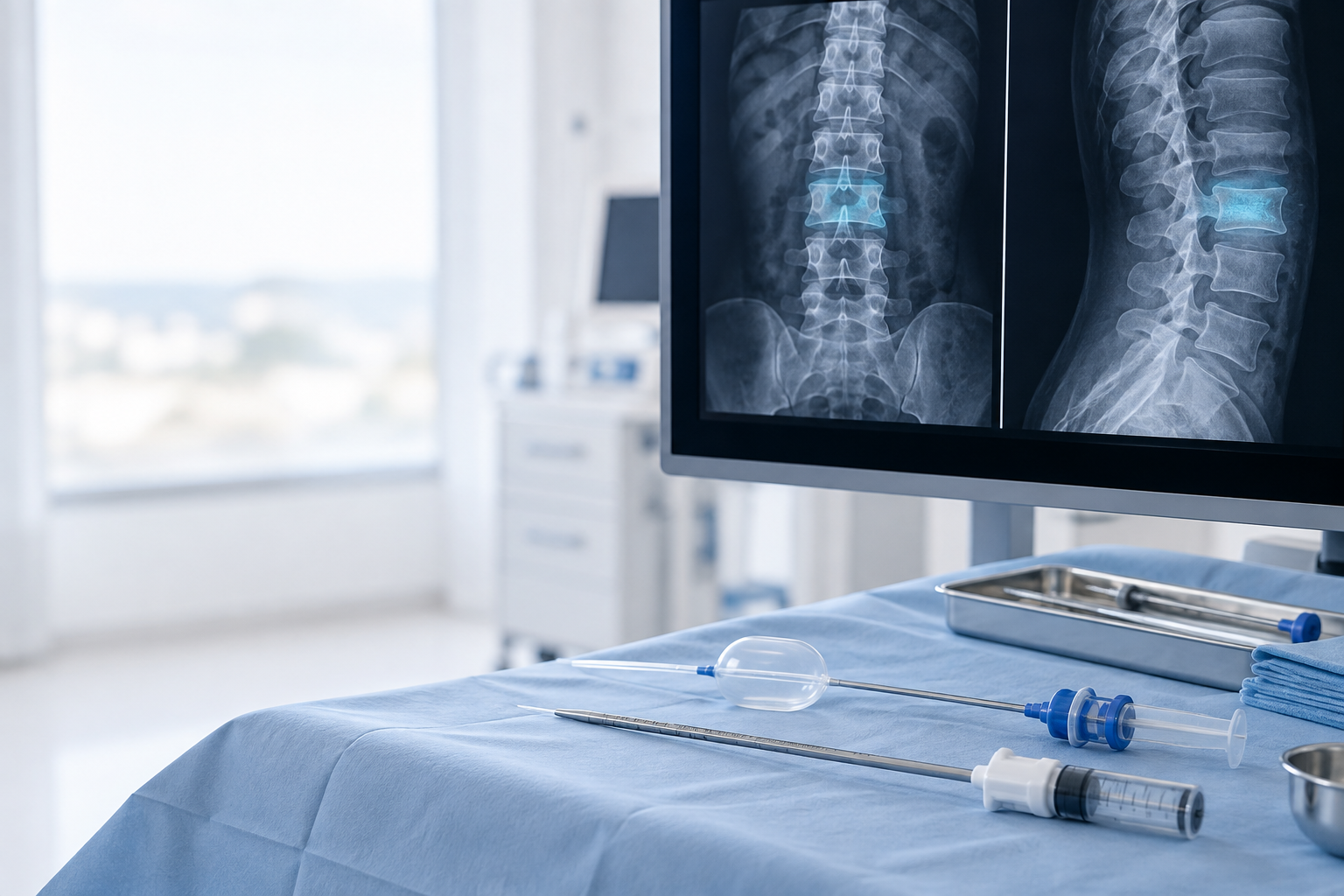
Kyphoplasty, sometimes called balloon kyphoplasty, is a minimally invasive surgical procedure performed through a very small incision in the back rather than through open surgery. A narrow instrument is guided into the fractured vertebral body using live X-ray imaging. A small balloon is then inflated inside the bone to create a cavity and, where possible, to help lift the collapsed bone closer to its original height. The balloon is removed and the space is filled with a specialised bone cement, which hardens within minutes to internally stabilise the fracture.
Vertebral compression fractures occur when one of the building blocks of the spine collapses, usually because the bone has become fragile. Many settle with time, pain relief, activity modification and treatment of the underlying bone weakness. However, some fractures remain intensely painful, limit walking and breathing, disturb sleep, and prevent recovery. In these situations, a stabilising procedure such as kyphoplasty may be discussed.
Kyphoplasty is classed as a minimally invasive surgical treatment rather than an injection or a purely diagnostic procedure. It sits between non-operative care, such as analgesia, bracing and bone health treatment, and larger reconstructive spinal surgery. The National Institute for Health and Care Excellence (NICE) has published guidance supporting the use of percutaneous vertebroplasty and percutaneous balloon kyphoplasty for people with osteoporotic vertebral compression fractures who have severe ongoing pain after a recent fracture despite optimal pain management. General information about osteoporosis and fragility fractures is also available from the NHS and the Royal Osteoporosis Society.
Who Needs Kyphoplasty in London?
- A painful vertebral compression fracture confirmed on imaging
- Osteoporotic spinal fractures causing ongoing pain
- Fracture pain not settling with rest, bracing and pain relief
- Difficulty standing or moving because of fracture pain
- Selected fractures from trauma, assessed individually
Kyphoplasty: The Procedure, Step by Step
Assessment & imaging
X-ray, MRI or CT confirms the fracture and that it is suitable for kyphoplasty
Positioning & anaesthetic
Lying face-down, under local anaesthetic with sedation, or a general anaesthetic
Guided access
Under X-ray guidance, a fine cannula is passed into the fractured vertebra
Balloon & cement
A balloon gently restores height and creates a cavity, which is filled with bone cement to stabilise the fracture
Recovery
No open incision is needed, pain relief is often felt quickly, and most patients mobilise soon after
Kyphoplasty Recovery Timeline
Day 0
Pain relief is often felt within a day; mobilising begins soon after
Weeks 1–2
Gradual return to light daily activity as comfort improves
Weeks 3–6
Progressive return to normal routines
Months 2+
Ongoing management of the underlying osteoporosis to reduce further fracture risk
Kyphoplasty Risks & Considerations
As with any spinal procedure, kyphoplasty carries some risks, including infection, bleeding, and a small risk of cement leaking beyond the vertebra, which careful image guidance is used to minimise. It treats the fractured vertebra but does not cure osteoporosis, so ongoing bone-health treatment remains important to reduce the risk of further fractures. Dr. Banerjee explains the benefits and risks for your specific fracture before you decide. General information on bone health and fractures is also available from the NHS.