
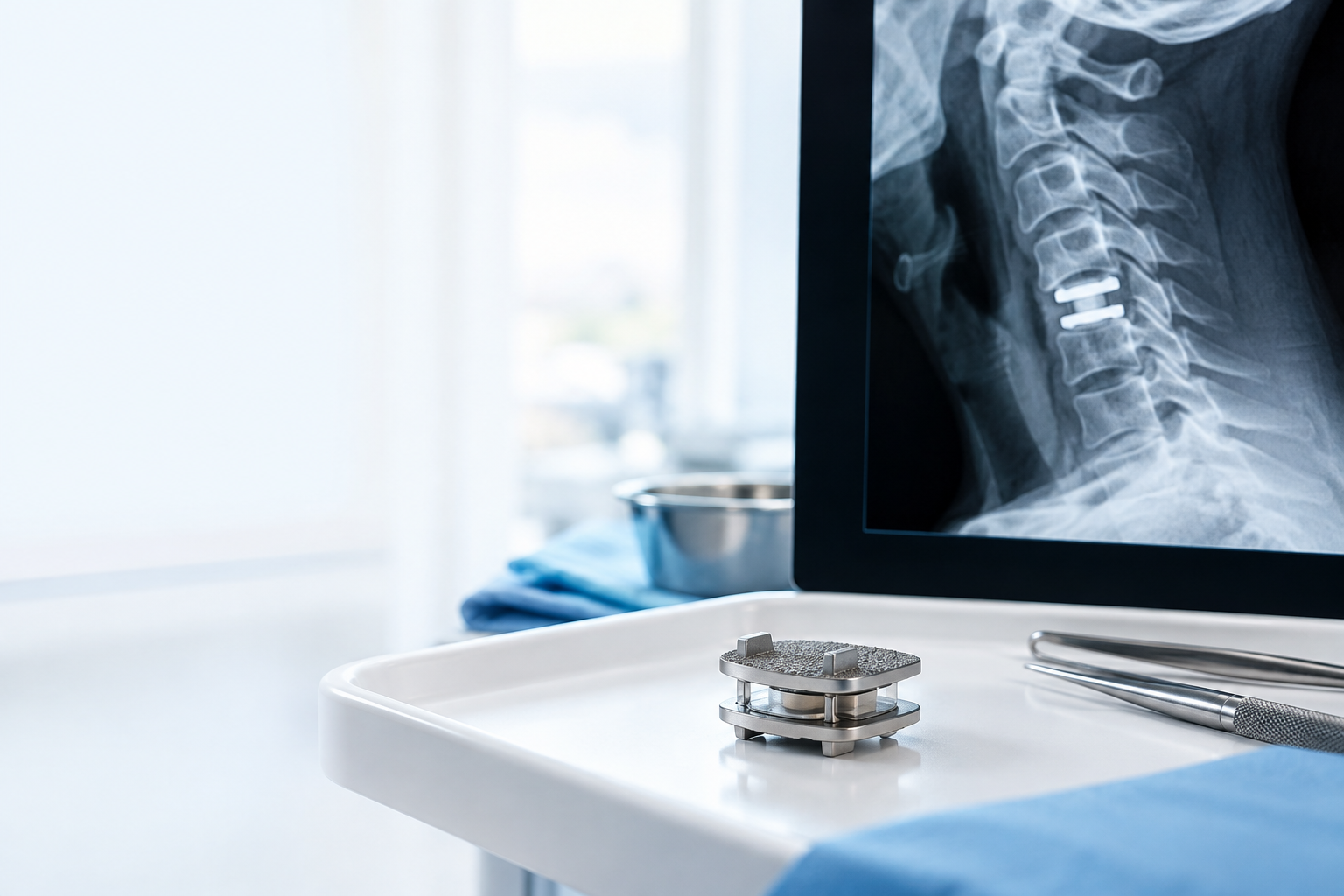
What is Cervical Spinal Disc Replacement? A Consultant Orthopaedic Spine Surgeon's Guide
Cervical spinal disc replacement, also known as cervical disc arthroplasty, is a surgical procedure used to treat a damaged or herniated disc in the neck. The affected disc is removed and replaced with an artificial disc designed to maintain movement between the vertebrae.
The procedure may be considered when a cervical disc is pressing on a nerve or the spinal cord and symptoms have not improved with appropriate non-operative treatment. Unlike cervical fusion, disc replacement aims to preserve movement at the treated spinal level.
Dr. Purnajyoti Banerjee, Consultant Orthopaedic Spine Surgeon in London, assesses symptoms alongside MRI and other imaging to determine whether cervical disc replacement is suitable.
Who Needs Cervical Spinal Disc Replacement in London?
- Arm pain, numbness or weakness caused by a cervical disc herniation
- Cervical radiculopathy caused by nerve compression
- Persistent symptoms despite physiotherapy or other conservative treatment
- A damaged cervical disc causing spinal cord or nerve compression
- Suitable cervical disc disease where preserving movement is appropriate
Cervical Spinal Disc Replacement: The Procedure, Step by Step
Assessment & Imaging
MRI and other imaging identify the affected disc and confirm whether cervical disc replacement is appropriate.
Anaesthetic & Positioning
The procedure is performed under general anaesthetic, with the patient carefully positioned for surgery.
Disc Removal
A small incision is made at the front of the neck and the damaged cervical disc is carefully removed.
Decompression & Disc Replacement
Pressure on the nerve or spinal cord is relieved before an artificial disc is positioned between the vertebrae.
5. Recovery
The incision is closed and patients begin gentle mobilisation as soon as medically appropriate.
Cervical Spinal Disc Replacement Recovery Timeline
Day 0–1
Early mobilisation and gentle neck movement begin
Weeks 1–2
Light activity and gradual return to desk-based work
Weeks 3–6
Progressive return to normal daily activities
Months 2–3
Gradual return to exercise and unrestricted activity when advised
Cervical Spinal Disc Replacement Risks & Considerations
As with any cervical spine procedure, disc replacement carries risks including infection, bleeding, nerve irritation and persistent symptoms. Temporary swallowing difficulty, sore throat or changes to the voice can occur following surgery through the front of the neck. There are also implant-related risks, including movement, wear or bone formation around the artificial disc. Dr. Banerjee will discuss the expected benefits, alternatives and individual risks before surgery.