
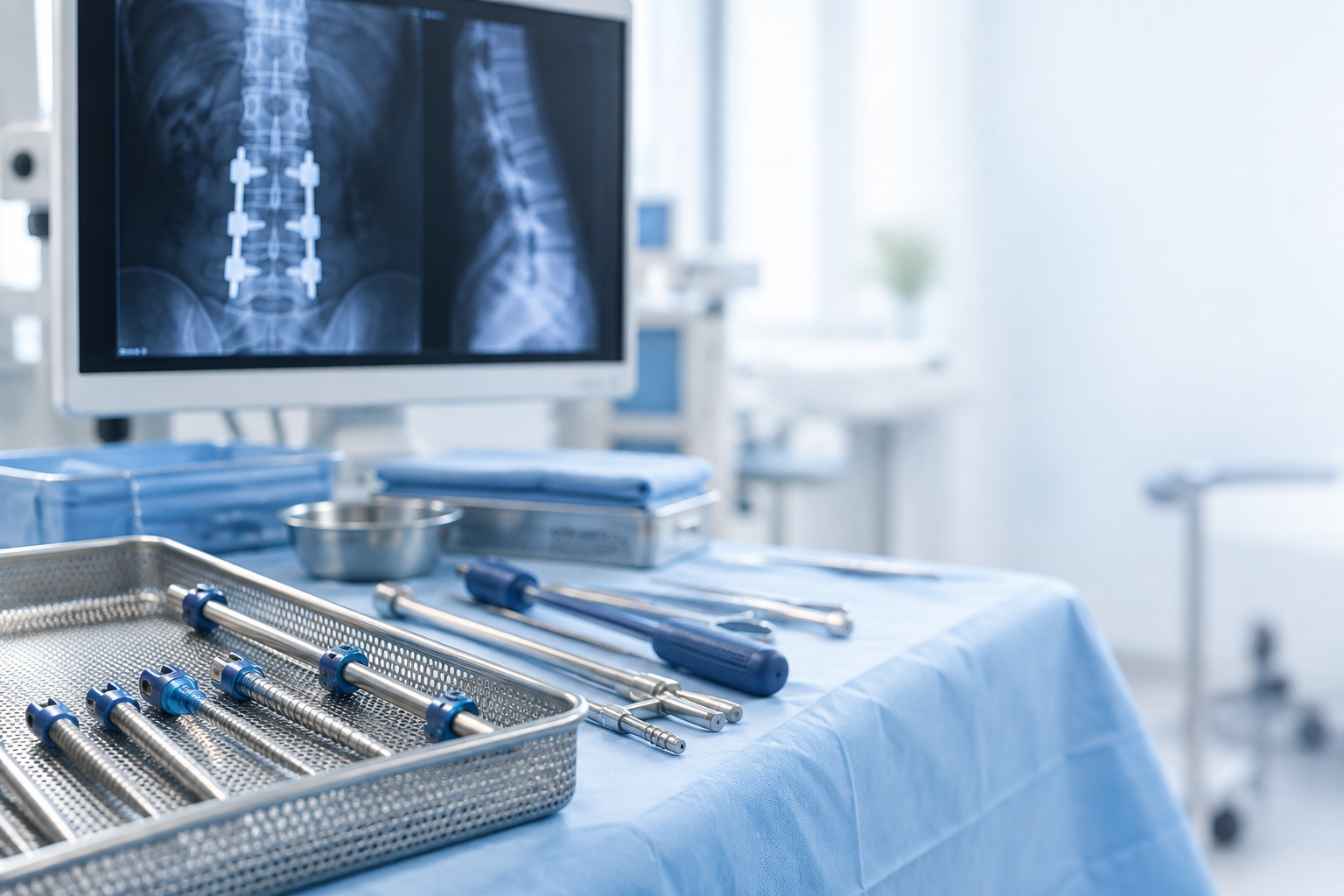
What is Spinal Fusion Surgery? A Consultant Orthopaedic Spine Surgeon's Guide
Spinal fusion surgery is an operation that permanently joins two or more vertebrae to stabilise a painful or unstable section of the spine. Bone graft is placed between the affected vertebrae and may be supported with screws, rods, plates or cages while the bones gradually heal together.
Fusion may be recommended when abnormal movement between vertebrae is contributing to persistent pain, nerve compression or spinal instability. It can be performed in the neck or lower back and is often combined with spinal decompression when pressure also needs to be removed from nerves.
Most patients are considered for surgery only after appropriate non-operative treatments have been tried. Dr. Purnajyoti Banerjee, Consultant Orthopaedic Spine Surgeon in London, assesses symptoms alongside MRI, X-ray or CT imaging to determine whether spinal fusion is appropriate.
Who Needs Spinal Fusion Surgery in London?
- Persistent back or neck pain associated with spinal instability
- Spondylolisthesis, where one vertebra slips relative to another
- Degenerative spinal conditions causing instability or nerve compression
- Spinal fractures requiring surgical stabilisation
- Selected cases of spinal deformity or recurrent problems after previous surgery
Spinal Fusion Surgery: The Procedure, Step by Step
Assessment & Imaging
MRI, X-ray or CT imaging identifies the affected spinal level and confirms whether fusion is appropriate.
Anaesthetic & Positioning
The procedure is carried out under general anaesthetic, with positioning determined by the area of the spine being treated.
Decompression
Where required, damaged disc material, bone or tissue compressing the nerves is carefully removed.
Stabilisation & Fusion
Bone graft is placed between the vertebrae, often supported by screws, rods, cages or plates to provide stability while fusion develops.
Recovery
Patients begin mobilisation as soon as appropriate, followed by a gradual return to normal activity while the fusion strengthens.
Spinal Fusion Surgery Recovery Timeline
Day 0–1
Early mobilisation and pain management begin
Weeks 1–2
Gentle walking and light daily activities increase gradually
Weeks 3–6
Progressive return to normal activities and suitable work
Months 2–6
Rehabilitation continues while the spinal fusion strengthens
Spinal Fusion Surgery Risks & Considerations
As with any spinal operation, fusion surgery carries risks including infection, bleeding, blood clots, nerve irritation and persistent symptoms. There is also a possibility that the bones may not fuse completely or that implants may require further treatment. The fused spinal level will no longer move, although the effect this has on overall movement depends on the location and number of levels treated. Dr. Banerjee will explain the expected benefits, alternatives and individual risks before surgery.