
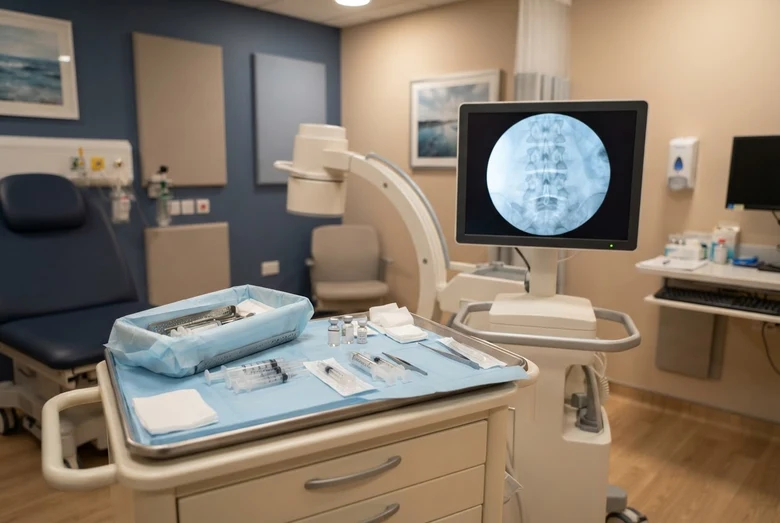
What are Non-operative Spinal Injections?
Non-operative spinal injections involve injecting anti-inflammatory and anaesthetic medications directly into the spine, typically under X-ray or ultrasound guidance. This technique ensures precision and effectiveness in pain relief.
Dr. Purnajyoti Banerjee, a Consultant Orthopaedic Spine Surgeon in London, frequently employs these injections to manage pain and diagnose the exact source of spinal issues, potentially reducing the need for surgical intervention.
Who Could Benefit from Non-operative Spinal Injections?
- Sciatica or back pain unresponsive to physiotherapy.
- Neck or arm pain from nerve irritation.
- Patients aiming to avoid or delay surgery.
- For diagnostic confirmation of spinal pain sources.
- For rapid relief from chronic pain flare-ups.
The Procedure: Step-by-step Guide
Assessment & Positioning
The affected spinal level is confirmed with imaging, and local anaesthetic numbs the skin.
Guided Access
A fine needle is directed to the precise spinal level using X-ray guidance.
Targeted Treatment
An anti-inflammatory and anaesthetic medication mix is injected around the affected nerve or joint.
Closure & Recovery
A special medicine is sprayed to seal the injection wounds and all patients can go home the same day.
Recovery Timeline
Day 0
Rest; some soreness is normal.
Weeks 1–2
Gradual increase in activity.
Weeks 3–6
Improvement continues; physiotherapy is often introduced.
Months 2–3
Full benefit assessment; further treatment discussed if needed.
Risks and Considerations
Spinal injections are generally safe, with minimal risk of infection or bleeding. Relief duration varies; outcomes depend on the individual condition. For detailed guidance, refer to NICE guidelines.
Frequently Asked Questions
How effective are non-operative spinal injections?
Research shows that up to 60% of patients experience significant relief, according to NICE. However, results can vary.
Are there any statistics on the success rate?
Studies indicate that around 70% of patients avoid surgery following successful spinal injections, according to a 2022 report from the British Pain Society.
What is the long-term outlook?
Many patients report reduced pain levels and improved quality of life. Ongoing evaluation is important to determine long-term benefits.