
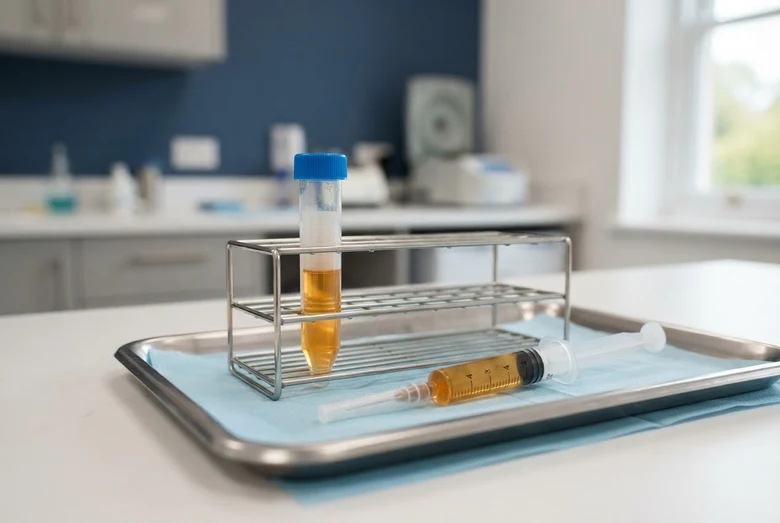
What is Platelet Rich Plasma Injection?
A Platelet Rich Plasma Injection involves taking a small sample of your blood, concentrating its platelets, and injecting it into the affected area. This procedure aims to utilise the growth factors released by platelets to support the body’s natural healing process. It is used for various conditions such as osteoarthritis and tendinopathy.
When Is a Platelet Rich Plasma Injection Recommended?
Platelet Rich Plasma Injection may be considered for joint or tendon problems, such as early osteoarthritis or stubborn tendinopathy, where inflammation-based injections have limited effectiveness. Given it uses your own blood, the risk of allergic reaction is low. However, as of 2023, evidence is still developing, and results vary. The NHS offers more insights into its various applications.
Conditions a Platelet Rich Plasma Injection Treats
- Osteoarthritis
- Tendinopathy
- Tennis elbow
- Early joint degeneration
- Persistent tendon pain
What Happens During Your Platelet Rich Plasma Injection?
BEFORE
You can eat and drink normally. Staying well hydrated helps the blood draw. Arrive early for consent.
DURING
A small sample of your blood is taken and spun in a centrifuge to concentrate the platelets. Under ultrasound or X-ray guidance, the prepared plasma is then injected into the affected joint or tendon.
AFTER
You rest the area and go home the same day. Benefit tends to build gradually over several weeks.
Benefits
- Uses your own blood, allergy risk is low
- A non-surgical option for degenerative joint and tendon pain
- Delivered accurately under image guidance
- May support the body's repair processes
Considerations
- Evidence is still developing, response varies
- Relief is not guaranteed
- Often not funded by insurance
- Temporary soreness after the injection